



 Tin Khu Vực

|
A discerning market
Phung Thi Lan Phuong, Head of the FTA Division of the Vietnam Chamber of Commerce and Industry’s WTO Center and Integration, believes the CPTPP will provide Vietnam with major opportunities to promote exports to Australia. Ninety-three percent of tariff lines will be eliminated as soon as the trade deal comes into effect, and the remainder will be removed within three to four years. A common tax level of AUD12,000 per product will be applied instead of the five-percent tax currently imposed on used autos based on their value. “Australia’s commitments in the CPTPP are at a higher level compared with those in the ASEAN-Australia-New Zealand Free Trade Agreement (AANZFTA), in terms of general principles, opening the service market and investment,” Phung Thi Lan Phuong said.
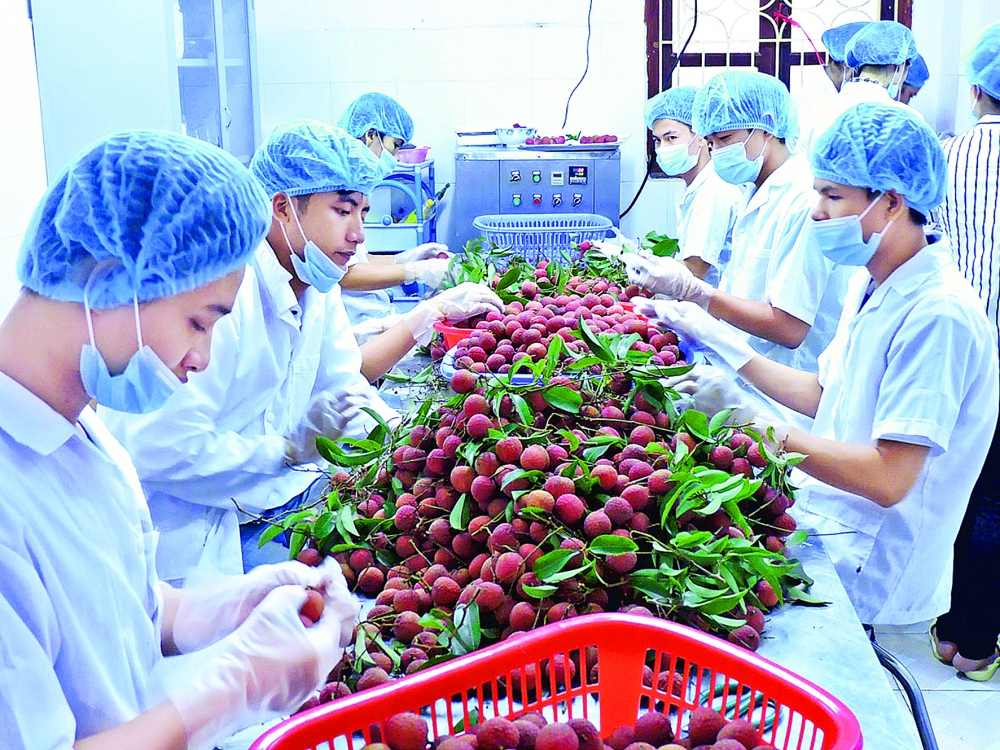
Despite these opportunities, Vietnamese companies have to overcome major challenges when exporting to Australia. According to Dinh Thi My Loan, President of the Association of Vietnamese Retailers, Vietnamese goods are usually imported in their raw form and then processed and packaged for export under importers’ brands. Major retail groups have purchasing agents in Hong Kong (China), Shanghai and Thailand but not Vietnam. Australian importers have rather high purchasing standards but often place small orders. Meanwhile, Vietnamese exports to Australia remain poor in structure and inferior to products of China, Thailand, Malaysia and Indonesia in terms of quality.
Phung Thi Lan Phuong said exports to Australia grew at a lower rate compared with the average growth of Vietnamese exports during the past decade. One of the reasons is that Australian imports and Vietnamese exports do not complement each other in terms of structure. Moreover, Australia is one of the world’s most demanding markets in terms of quarantine and product safety requirements.
Enhancing competitiveness
To make the most of CPTPP preferences to increase exports to Australia, Dinh Thi My Loan said businesses should concentrate on promoting the export of products in which Vietnam has advantages and which enjoy more preferences. These include fruit and vegetables, electronics, rubber, plastics, textiles, garments and footwear.
Businesses also need to seek information about Australian supermarkets and their supplier, regional agent and/or wholesaler access policies. “To be firmly positioned in the Australian market, Vietnamese companies should apply cleaner production methods and give top priority to ensuring product quality rather than increasing output and offering low prices. It’s necessary to set up production chains,” Dinh Thi My Loan said.
In the opinion of Nguyen Anh Duong, Head of the Central Institute for Economic Management’s General Research Department, in order to take advantage of CPTPP preferences, Vietnamese exporters and investors need to take the initiative in resolving existing problems and enhance their competitiveness.
|
In the past decade, trade between Vietnam and Australia has doubled, from US$3 billion to US$6 billion. Australia is Vietnam’s eighth largest export partner and 12th largest import partner. Vietnam ranks 14th among Australia’s trading partners in terms of both import and export. |