



 Tin Khu Vực



 |
Branding and competitiveness improvement
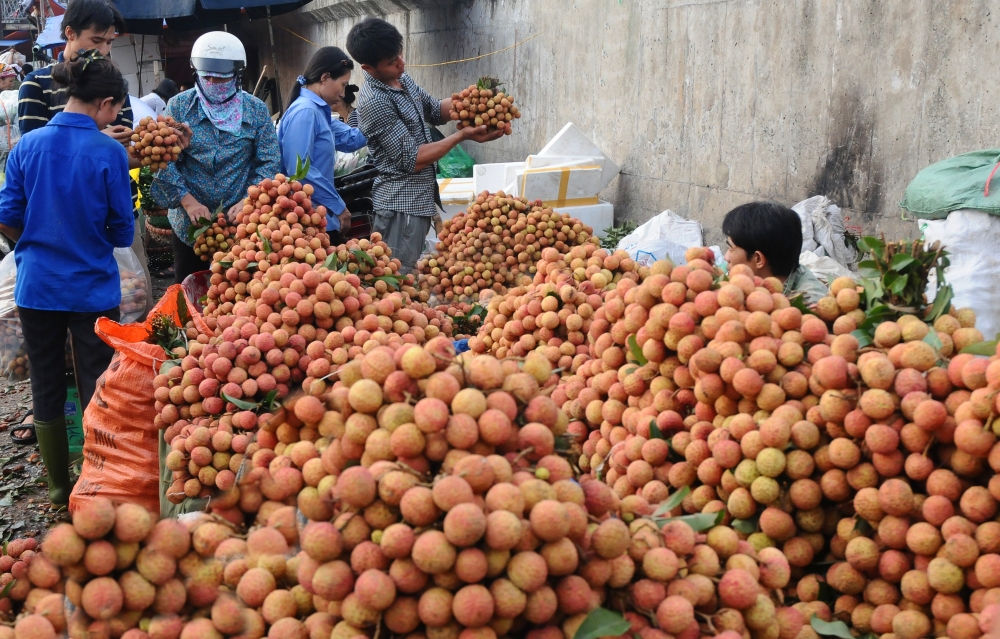
As the cradle of late-maturity longan, Dai Thanh Commune in Hanoi’s Quoc Oai District has more than 115ha of longan under harvest. Dai Thanh is home to centuries-old late-maturity longan tree in Vietnam.
Previously, each household in Dai Thanh grew several late-maturity longan trees catering for their family needs and did not focus on productivity and quality improvement. Since 2012, late-maturity longan has become a prioritized variety under Hanoi’s special produce development project, and most households in Dai Thanh have been implementing a high-quality longan cultivation model.
In 2013, the Ministry of Science and Technology’s Intellectual Property Office of Vietnam granted late-maturity longan grown in Dai Thanh the Dai Thanh Quoc Oai agricultural collective trademark. Since then, Dai Thanh late-maturity longan has been exported to a number of countries and sold in supermarkets and safe farm produce stores in Hanoi. As a special farm produce of Hanoi and a strategic crop of Quoc Oai District, late-maturity longan has helped improve incomes of many farmer households in the region.
According to the Hanoi Department of Agriculture and Rural Development, more than 500ha of late-maturity longan is grown in Hanoi, mainly in Hoai Duc and Quoc Oai districts. The longan trees provide a total output of 8,000-9,000 tonnes per crop and a yield of 20-50 tonnes per hectare, while their fruits are sold at a wholesale price of VND40,000 per kilo. Most farmer households earn about VND1 billion per hectare per crop.
Apart from Dai Thanh late-maturity longan, according to the department, Hanoi has helped branding and labeling of more than 40 other agricultural products. These include Boi Khe fragrant rice (from Thanh Oai District), Dong Phu organic rice (Chuong My District), hill-grazed chicken (Ba Vi District), hill-grazed chicken (Soc Son District), Mia chicken (Son Tay District), and Van Dinh duck (Ung Hoa District), among others. In 2019, Hanoi licensed the agricultural collective trademark for the Ngau liquor village (Tam Hiep Commune in Thanh Tri District), Kim Son-Son Tay honey (Son Tay Town), Khai Thai water dropwort (Phu Xuyen District), Le Mat snakes (Viet Hung ward of Long Bien District), and Van Ha grapefruit (Phuc Tho District).
After obtaining an agricultural collective trademark or intellectual property certificate, most products see their prices increasing 15-20 percent, and accessing additional markets including supermarkets and distribution networks inside and outside the city.
At home and abroad
The Intellectual Property Office of Vietnam is working with the Ministry of Industry and Trade’s Vietnam Trade Promotion Agency (VIETRADE) on intellectual property registration of key Vietnamese products in major foreign markets in North America, Western Europe, and Japan.
The Ministry of Science and Technology, the Ministry of Agriculture and Rural Development, and the Ministry of Industry and Trade signed a regulation on coordination in geographical indications and management. Apart from efforts by ministries, sectors and localities, enterprises’ cooperation in farm produce processing, production organization, and food safety and hygiene standard satisfaction are important for branding development.
Economists say that in the context of globalization and new-generation free trade agreements (FTAs), product quality and design improvement is important for Vietnam’s ability to carve a bigger niche for its farm produce in domestic and foreign markets. Farm produce exporters should prepare well for potential export deals with countries with which Vietnam has signed FTAs after the Covid-19 pandemic is controlled. They should also consider taking advantage of the EU-Vietnam Free Trade Agreement (EVFTA), to be approved by the National Assembly during its 14th tenure’s 9th session, to reach the US$42 billion farm produce export target.
The Hanoi Department of Agriculture and Rural Development said it submitted to the Hanoi People's Committee for approval a plan for EVFTA implementation from 2020-2025, while coordinating with concerned authorities and sectors in supervising signed FTAs implementation. The department informed the National Assembly’s supervision team of Hanoi’s agreements’ implementation, and cooperation between the city and Australia, Japan, the Republic of Korea (RoK), ASEAN (the Association of Southeast Asian Nations), the EU, South Africa, and Egypt.
The department continues to provide information about farm produce import and export through border provinces, and suppliers of production materials and Covid-19 pandemic prevention products, while getting enterprises to participate in online trade exchange with partners from China’s Guangxi province, a program conducted by VIETRADE.