



 Tin Khu Vực


 |
How do you evaluate the Vietnamese aviation industry’s growth?
The Vietnamese aviation industry has seen strong growth in the number of passengers and aircrafts in recent years. Air travel increased 29 percent in 2016 over 2015, and 19 percent in the first half of this year compared to a year ago. The number of passengers traveling through airports in Vietnam increased by 17.5 percent and the transportation volume of Vietnamese airlines rose by 15.1 percent. We attribute the strong growth to efforts in promoting the domestic market, where Vietnam’s air carriers are currently operating 52 domestic routes connecting Hanoi, Da Nang and Ho Chi Minh City with 18 local airports throughout the country.
Vietnam also witnessed a boom in the opening of international air routes in 2016. To date, 52 foreign airlines from 28 countries and territories are exploiting 78 air routes to and from Vietnam.
Have infrastructure and service quality caught up?
Strong growth has posed many challenges and difficulties for the Vietnamese aviation industry. To meet the increasing demand, infrastructure and service quality must be upgraded in accordance with standards. Some airports have upgraded and expanded their infrastructure, such as terminals and parking areas. In addition, management capacity, non-aeronautical services and quality of human resources have been improved to meet the growth of the market as well as strict requirements in terms of security and safety.
|
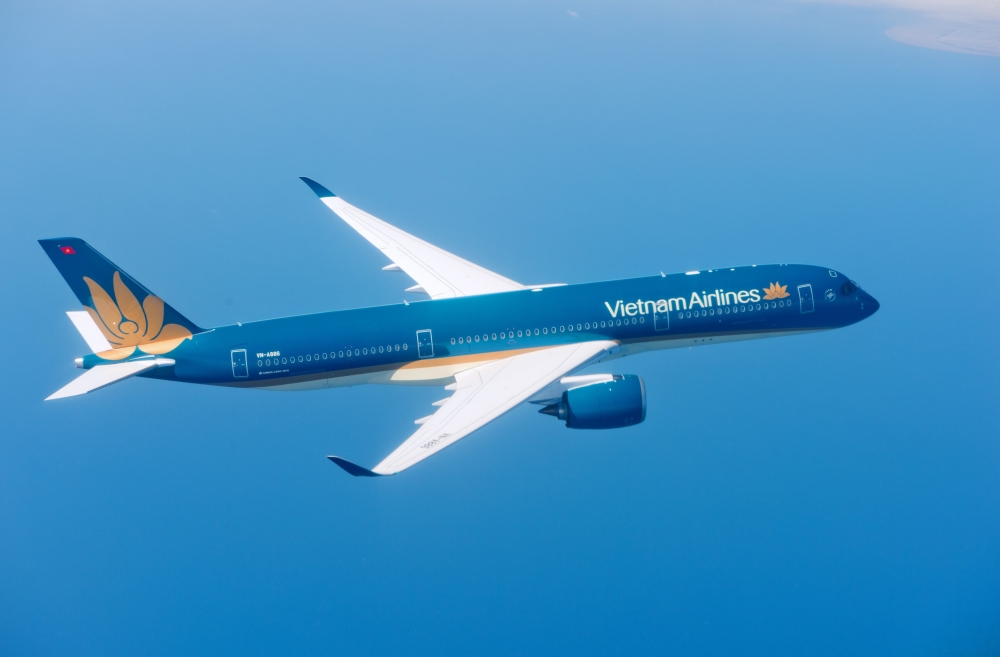
Vietnamese carriers have increased their capacity significantly. As of June 2017, the total number of commercial aircraft had increased to 164, some 10 percent (17 units) higher compared to the end of 2016. By the end of 2017, Vietnam’s air carriers plan to receive 20 additional aircraft. In addition, construction of new terminals and the expansion of existing terminals is underway, with some nearing completion. The Vietnamese aviation industry is reviewing airport infrastructure to identify the needs for further investment, upgrading and expansion of 21 airports with a focus on Tan Son Nhat, Noi Bai and Chu Lai airports, serving Ho Chi Minh City, Hanoi and the central region. Service quality has also been significantly improved. In the first six months of 2017, Vietnam’s air carriers operated 137,600 flights, an increase of 7.2 percent compared to a year ago. Flight delays and cancellations accounted for 12.2 percent and 0.5 percent of the total, a drop of 3.6 percentage points and 0.1-percentage point year-on-year, respectively.
To better serve passengers, CVVA carried out a survey among 3,000 passengers in the first quarter of 2017. Preliminary results indicate passengers still had relatively good comments on service quality at airports. Until the end of this year, we will complete a survey to assess customer satisfaction at six airports. The results will reflect more clearly the level of satisfaction, so that service providers can take measures to improve service quality further.
|
What should the Vietnamese aviation industry do to meet its growth targets?
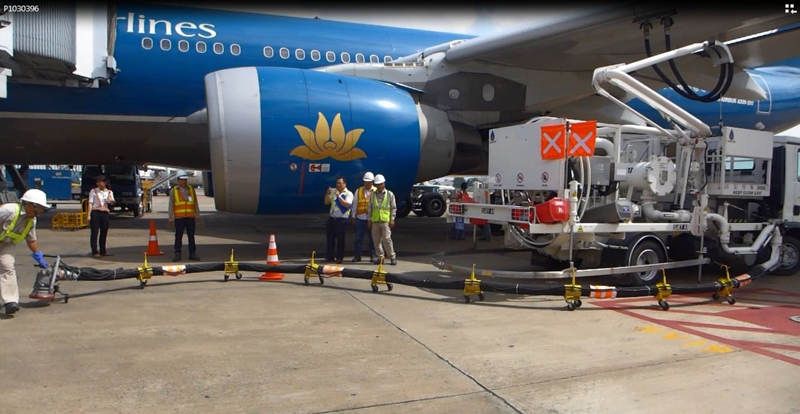
The Ministry of Transport will continue to focus on deploying the Long Thanh International Airport project and upgrading Ho Chi Minh City’s Tan Son Nhat Airport. In addition, we will also quickly complete the building and upgrading of Tho Xuan Terminal, the second terminal at Cat Bi Airport and a new international passenger terminal at Can Ranh Airport.
During the 2016-2020 period, the Airports Corporation of Vietnam plans to spend VND31.6 trillion on projects to raise capacity, invest in machinery and equipment, and expand terminals and airfields. Regarding flight management, we will continue to carry out the official Vietnamese policy of ensuring that the aviation industry not be left behind in terms of capacity and technology. This is a very difficult task, requiring a large investment.
In terms of air transport, the Vietnamese aviation industry will strictly implement the ASEAN Single Aviation Market (ASEAN-SAM expected to fully liberalize air travel between member states in the ASEAN region. This will allow ASEAN countries and airlines operating in the region to directly benefit from the growth in air travel around the world, and ease tourism, trade, investment, and service flows among member states.